Final Fantasy VII Revelation Is 200GB, and It Has Me Thinking About Physical Games
Final Fantasy VII Revelation is shaping up to be around 200GB, raising bigger questions about physical media, preservation, and what game ownership should mean going forward.
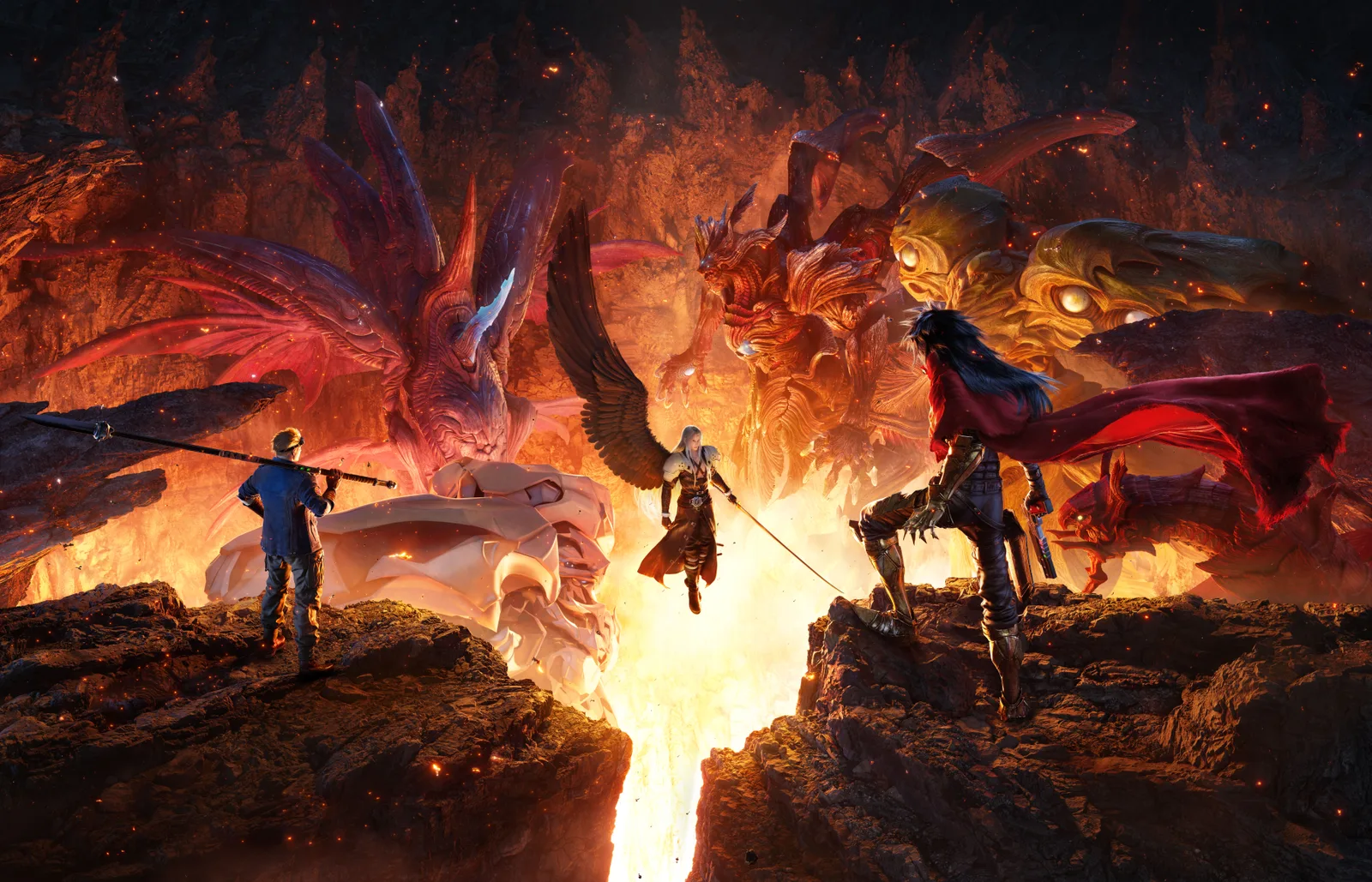
On April 8th, 2027, Final Fantasy VII Revelation releases to the masses on PC, PS5, Xbox, and Nintendo Switch 2. This is exciting for many people, myself included! However, it’s less exciting for some because…it’s going to be around 200GB.
On September 18 Video Games Chronicle did an interview with FFVII Revelation’s director, Naoki Hamaguchi. In this interview, Hamaguchi revealed that all physical editions of the game, no matter the platform, will require additional downloads. He stated that while things are still being worked on, the game will probably end up somewhere around 200GB on some platforms.
That is not a small download by any stretch of the imagination. 200GB can be a storage problem for some out there. Maybe people have games they don’t want to uninstall or maybe their internet isn’t exactly the best. Data caps from ISPs exist so there’s that angle as well. Revelation then becomes part of the discussion before anyone even gets a chance to play it.
This got me thinking about a big and uncomfortable discussion that’s been hanging over gaming for years now: physical media and what exactly we want physical ownership to mean going forward.
It makes sense why people fight so hard to keep physical games around. I’m one of those people. I don’t know about you, but I find it pretty reassuring that I can point to a game on my shelf and say, “I own that.” Having that nice looking shelf lined with all those pretty boxes is satisfying!
With digital purchases, you don’t really get that same sense of permanence as having continued access can depend on storefronts, accounts, licenses, and services that may one day disappear.
Now is where things get a little complicated.
Modern video games are massive. A UHD Blu-ray can only hold about 100GB, and if a game approaches 200GB, publishers really have limited options at that point. They can ship multiple discs, require additional downloaded data, make games smaller somehow, or pivot toward digital distribution.
None of these options completely solve the problem.
Multiple discs are absolutely possible, but increase manufacturing and packaging requirements. Extra downloads make the physical version easier to produce, but it also weakens one of the core arguments in favor of physical media in the first place: preservation.
If a disc only contains part of the game, what happens if, twenty years from now, the servers that host the rest no longer exist? I think this is where the physical-versus-digital argument gets a lot more complicated than just deciding which format we prefer.
In the VGC article, Hamaguchi brought up the advantages of digital distribution. He explained that if they were to do a full disc release, it would require them to lock things down for performance checks and production roughly three months in advance. However, with a download-only release, developers can theoretically continue to fix serious issues right up to launch. To emphasize: Hamaguchi wasn’t saying one format was better, he was merely stating the production advantages of digital distribution.
Perhaps the question shouldn’t be whether physical or digital games win. I think maybe the question should be, “How can we make sure that, regardless of how games are distributed, buying one still means something twenty years down the road?”
Physical ownership needs to survive, 100%. I’m just not quite convinced that our current definition of physical ownership can exist alongside games that are 200GB.
Filed under
More from Features
Back to the front pageMore like this
Final Fantasy VII Revelation Is Set To Close Out the Remake Series
The release date for Final Fantasy VII Revelation has finally been revealed. After 12 years, the Remake series will finally come to a close in April 2027.